
NEWS
🚨 BREAKING: The U.S. Department of Homeland Security has officially run out of money and will shut down tonight after politicians failed to reach an agreement on immigration funding. ⚠️ Due to the funding deadlock in Congress, the agency is being forced into a sudden and total shutdown of activities — halting key operations immediately. 🤯 What does this mean for border control, airport security, and national safety? 👉 Click the link now to read the full story and see what happens next.

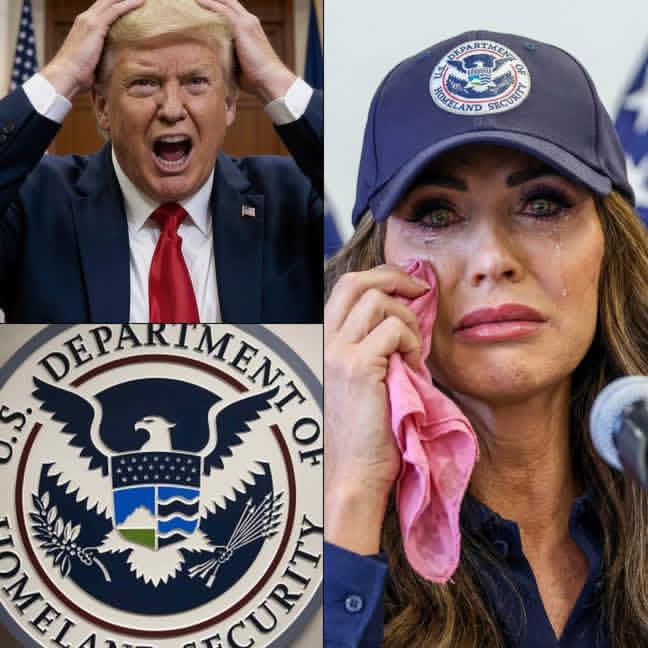
🚨 U.S. Department of Homeland Security Shuts Down After Funding Talks Collapse
The U.S. Department of Homeland Security (DHS) has officially begun a shutdown after Congress failed to reach an agreement on funding before the latest deadline, leaving the agency without money to operate many of its programs. The shutdown started at midnight Eastern Time as funding from lawmakers expired — marking the third major shutdown tied to budget disputes this year. �
🔥 Why It Happened
Funding talks collapsed after lawmakers in the Senate failed to pass a spending bill that would keep DHS funded. Democrats refused to support the measure without adding new restrictions and oversight on immigration enforcement, a response to high-profile incidents in cities like Minneapolis where federal agents were involved in fatal shootings. Republicans opposed the proposed changes, saying they would hinder border security. �
Despite ongoing negotiations, Congress has now gone into recess for about 10 days, making it unlikely that the shutdown will end quickly. �
🧠 What’s Still Running
Not all DHS functions have stopped. Certain parts of the agency continue operating even without funding:
Immigration and border enforcement (such as Customs and Border Protection and Immigration and Customs Enforcement) still have funding from a previous bill, meaning those operations continue. �
Many roles deemed “essential” will remain active. This includes jobs related to public safety and national security. �
Department of Homeland Security
However, most of these essential workers — including TSA officers and some cybersecurity staff — will be working without pay until funding is restored.
✈️ Airport Security and Travel Effects
One of the most visible parts of the shutdown will be at airports, where the Transportation Security Administration (TSA) is still required to operate but employees won’t be paid until the budget impasse is resolved. Past shutdowns have shown that this can lead to higher absenteeism and longer security wait times if the situation continues. �
Travel experts are urging passengers to arrive early and be patient, especially at major U.S. airports, as staffing pressures could affect normal airport operations.
🌀 Other Areas Likely Impacted
In addition to airport security:
The Federal Emergency Management Agency (FEMA) may see delays in long-term disaster responses and support because planning and grant approvals can slow down when funding is absent.
The Cybersecurity and Infrastructure Security Agency (CISA) will still operate, but prolonged uncertainty could affect coordination with states and critical infrastructure partners. �
The Coast Guard stays operational for safety and rescue missions, but some non-critical activities might be suspended. �
⚖️ Political Fallout
Both sides of the political divide are blaming each other:
Republicans argue the shutdown puts national security at risk and claim Democrats are using reforms as leverage. �
House Appropriations GOP
Democrats insist that changes to immigration enforcement policy are necessary and won’t approve funding without them. �
Senators from both parties remain in a deadlock, and with lawmakers out of Washington until after the recess, there’s no clear plan yet to end the shutdown. �
T

BREAKING: Study reveals Trump’s Iran war has cost American households $750 each Trump launched a war in Iran in February without a single vote from Congress, and American families are now footing the bill. A new analysis from Moody’s Analytics puts the total cost to U.S. households at $100 billion so far, working out to roughly $750 per household.
BREAKING: TOTAL DEFEAT! Trump abandons his $1.8 billion slush fund for insurrectionists and MAGA pedophiles after America revolted against the deeply corrupt plan.
BREAKING: A federal appeals court dealt a major blow to the Trump administration’s transgender military policy, ruling that thousands of transgender service members are likely to succeed in their constitutional challenge.
Kennedy Center Fight Sparks Fresh Trump Reactions Political attention remains fixed on Donald J. Trump after a federal judge ordered the removal of Trump’s name from the Kennedy Center and blocked plans to close the institution for major renovations.
🚨👀 THE EPSTEIN FILE SHOWDOWN IS LITERALLY BLOWING UP WASHINGTON! Congressman Thomas Massie has completely rocked the political world by demanding the immediate release of the unredacted Jeffrey Epstein files! Massie went absolutely wild on the DOJ, accusing them of actively shielding insanely powerful names from the public view. Transparency advocates are screaming that the full truth must drop to restore public trust, while critics claim it’s a dangerous media circus. Is a massive cover-up happening right now, or is this just political theater? Do you support a full congressional review to uncover the truth, or it will raise a political warfare?

TUSK CZY NAWROCKI? Nowy sondaż szokuje. Polacy wyraźnie wybrali, komu ufają bardziej
At 8:15 this morning, the President of the United States began panicking in front of the entire world. For more than seven hours, he posted nearly 50 times. And when he finally slowed down, it would stand as one of the most revealing fits of rage of his presidency to date. Because what he shared was beyond any reasonable person’s comprehension.
🚨 JUST IN: 🇺🇸 US forces fire a missile at a ship attempting to bypass the American blockade in the Gulf of Oman
Donald J Trump’s name being torn down from the John F. Kennedy Center for the Performing Arts in Washington, D.C. wasn’t just a slap in the face to the GOP and their bad policies it was a reminder that hate has no place in America. U.S.A.
🚨 JUST IN: 🇵🇱🇷🇺 Polish Foreign Minister Radosław Sikorski says: “Regardless of whether it was on purpose or the result of ineptitude, Russia is still dangerous and we must defend ourselves against it.”
🚨 JUST IN: 🇮🇷🇺🇸 An Iranian missile strike on a U.S. military base in Kuwait reportedly injured five Americans and damaged MQ-9 Reaper
