
NEWS
BREAKING: Donald Trump is threatening criminal action against Jerome Powell. Not over corruption. Not over misconduct. But because the Federal Reserve refused to lower interest rates to suit Trump’s political needs. Powell just confirmed the “investigation” is a pretext – pressure meant to intimidate the Fed into changing monetary policy. That’s not oversight. That’s coercion – and a direct attack on Fed independence. This is what authoritarian economics looks like folks.

BREAKING: Trump Threatens Criminal Action Against Fed Chair Powell — What It Means for U.S. Democracy and Monetary Policy
In an unprecedented escalation of tension between the Executive Branch and the United States’ independent central bank, President **Donald Trump’s administration has initiated a criminal investigation targeting Federal Reserve Chair Jerome Powell — a move Powell himself characterizes as political retaliation for his refusal to bow to presidential pressure on interest rate policy.
The dispute — ostensibly grounded in allegations that Powell misled Congress about a $2.5 billion renovation project at Fed headquarters — has ignited alarm among economists, lawmakers, market observers, and legal scholars, who view this shift toward criminal legal action as a blatant threat to the independence of monetary policy in the United States. �
The Anatomy of the Conflict
At its core, this confrontation reflects a deeper struggle over who controls interest rate policy — the lifeblood of economic stability — and whether that authority can be subordinated to political interests.
For months, Trump has repeatedly criticized Powell and the Federal Reserve for what he deems insufficiently aggressive rate cuts, arguing that lower rates would stimulate economic growth and support political objectives. Powell, by contrast, has maintained that interest rate decisions must be made on the basis of economic evidence — including inflation and employment data — free from political interference. �
The new flashpoint came when the U.S. Department of Justice served the Federal Reserve with grand jury subpoenas tied to Powell’s testimony before the Senate last June concerning the renovation of the Federal Reserve’s historic office buildings in Washington, D.C. �
While the administration frames this as legitimate oversight into cost overruns and accountability, Powell has publicly dismissed the legal threats as pretexts, asserting that the real motive is to coerce the Fed into following the President’s policy preferences — particularly on interest rates. �
Powell’s Rare and Unambiguous Rebuttal
Powell — typically cautious in public — took the rare step of issuing a direct video statement condemning the investigation, calling it intimidation and a threat to the fundamental principle of Fed independence. �
In his statement, Powell emphasized:
Respect for the rule of law, even for the chair of the Federal Reserve.
That the subpoenas and threat of indictment are not legitimately about the renovation or congressional oversight, but rather a consequence of the Fed’s willingness to set interest rates based on economic conditions rather than presidential preference. �
His commitment to making decisions without political fear or favor, consistent with the Fed’s dual mandate of price stability and maximum employment. �
mint
Powell’s framing of this episode is important. Rather than merely deny wrongdoing, he defined the legal action itself as a form of political pressure — an assault on the institutional independence that is widely considered foundational to U.S. monetary policy. �
The Business Standard
Political and Institutional Pressure Points
Critics of the administration’s move have pointed out several worrying trends:
1. The Weaponization of Justice
Democrats and institutional watchdogs argue that using criminal investigatory powers to advance policy preferences violates centuries of constitutional practice separating monetary authority from short-term political exigency. They see this as political coercion masquerading as legal oversight. �
2. Undermining Rule-of-Law Norms
By threatening indictment over policy disagreement, the administration blurs the lines between legitimate oversight and punitive actions aimed at dissent. Powell’s statement underscores that no public official — especially one leading a technocratic institution — should fear legal reprisal for acting according to their professional judgment. �
3. Market Reactions and Economic Risk
Markets have already reacted with instability — including a weaker dollar and faltering stock futures — as investors question whether the Fed can maintain credibility if its decisions are subject to political override or legal threat. �
Financial Times
A Broader Pattern of Institutional Pressure
This confrontation is part of a broader pattern of tension between the Trump White House and independent institutions — including federal watchdog agencies, regulators, and now the central bank. Trump’s critics argue this pattern reflects a drive toward greater executive control over traditionally autonomous functions of government. �
Even some Republicans — such as Senator Thom Tillis — have broken ranks to criticize the action, warning that it erodes the independence of both the Federal Reserve and the Justice Department and threatens market confidence. �
Why Central Bank Independence Matters
Central bank independence isn’t a dry academic concept — it is a pillar of modern macroeconomic policy that helps ensure:
Stable inflation expectations
Consistent monetary policy, even across political cycles
Investor confidence in U.S. debt and finance
Protection against politically motivated credit bubbles
For decades, U.S. presidents from both parties have respected the Federal Reserve’s operational independence, understanding that short-term political demands can conflict with long-term economic health. Powell’s defiance signals a willingness to preserve this tradition — even under intense pressure.
The Danger of Pretextual Legal Action
By invoking criminal legal authority — even loosely tied to a renovation project — the Trump administration’s move sets a potentially dangerous precedent:
It signals that federal officials might be subject to legal jeopardy for making policy decisions that frustrate presidential preferences.
It embeds political calculus into law enforcement actions, which could chill independent decision-making across government agencies.
It raises the specter that legal processes could be used as leverage to enforce political alignment rather than uphold the law. �
Whether or not the investigation ultimately leads to formal charges, the threat itself is a powerful instrument — one that could reshape expectations about how autonomous institutions operate within the U.S. political system.
Conclusion: What This Moment Represents
This drama is more than just a news headline — it’s a constitutional and economic watershed moment. Here’s what’s at stake:
Institutional independence vs. political coercion
Rule-of-law norms vs. weaponized legal threats
Evidence-based decision-making vs. policy dictated by political whim
Powell’s firm, public pushback — an unusual step for a Federal Reserve Chair — highlights just how high the stakes have become. As economic and political actors watch closely, this confrontation may well define the future contours of U.S. monetary autonomy, legal norms, and the balance of power between technocratic institutions and political leadership.

JUST IN: Spain’s Supreme Court Reviews Emergency Motion to Sanction Donald Trump and Benjamin Netanyahu for Acts of War for their military action in Iran and for Disrespecting the Spain Kingdom

🚨3 MINUTES AGO: Trump ERUPTS as U.S. Airports FALL SILENT — 3 MILLION TOURISTS CANCEL TRIPS ALL AT ONCE🔥

🚨Trump IS “TRAITOR” Military General GOES NUTS on Trump✨……
JUST IN; Congress Blocks Donald Trump’s Access to lTaxpayer Funds For Military Funding of Iran war After Lawmakers Deem Ongoing Military Actions in Iran Wasteful, Unnecessary, and Costly to U.S. Interests

🚨Trump CAUGHT RED HANDED on Camera Judge Drops DEVASTATING Order⚡…..

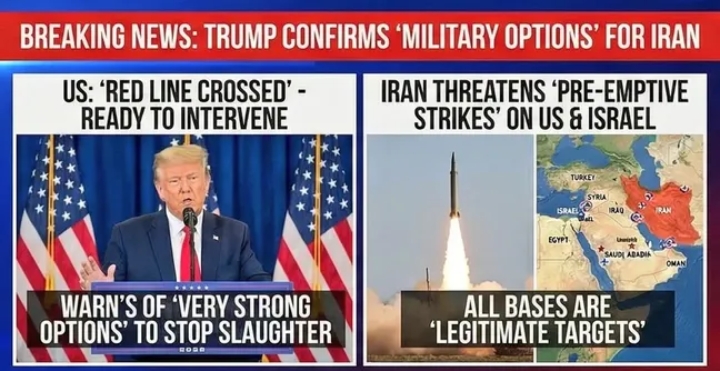
U.S. President Donald J. Trump issued a forceful warning to Iran, stating that any attempt by Tehran to carry out threats against his life or pose an immediate security danger to the United States would prompt an overwhelming American military response

🔥 BREAKING: TRUMP RESPONDS AFTER HIS NIECE MAKES SURPRISING CLAIMS ABOUT THE FAMILY ON LIVE TV — STUDIO FALLS SILENT ⚡ What began as a routine televised interview quickly turned into one of the most talked-about moments of the week. During the live segment, Trump’s niece referenced personal observations and previously reported details about internal family dynamics. She spoke calmly, without dramatic flair, but her remarks were pointed enough to shift the tone of the room. There were no sweeping accusations — just carefully worded statements that immediately captured attention. The audience went quiet. For several long seconds, the studio seemed frozen as viewers processed what had just been said. Then came the reaction — a mix of applause, murmurs, and visible surprise. The host didn’t interrupt. The moment was allowed to breathe, amplifying its impact. Within minutes, clips from the appearance began circulating across social media. Media observers noted how quickly the segment gained traction, fueling debate about what was implied versus what was explicitly stated. According to reports and online chatter, Trump was made aware of the broadcast shortly after it aired, with insiders suggesting there was a strong reaction behind the scenes as the clip spread. What stood out wasn’t volume. It was proximity — a family member speaking live, in her own words, shifting the conversation in real time. 👇 The article and clip is now drawing widespread attention — watch the segment that sparked the political buzz before it disappears. 💥

🚨 This Has NEVER Happened Before in U.S. History… Thirty-eight top military leaders — including seven four-star generals — just refused to stand behind President Donald Trump as commander-in-chief. They claim national security decisions were delayed for political optics. If this is true, it could shake the foundation of civilian control over the military. 👉 Tap the link to read the full letter and what it means for America.

🚨Melania BREAKS SILENCE as Trump Corruption Files GO PUBLIC!!⚡…… The Supreme Court has delivered a major blow to Donald Trump by ruling that New York prosecutors can obtain his tax returns and financial records. After years of legal battles and millions spent trying to block the subpoenas, the Court made it clear: a president is not above the law. The records are now in the hands of prosecutors and are being reviewed by grand juries and forensic investigators. At the same time, Melania Trump has publicly spoken out, calling the past few years “challenging” and expressing emotional support for her husband. However, she avoided defending him on the actual legal allegations. Reports suggest she has kept her distance from his court appearances and legal strategy, treating his legal troubles as his responsibility. This creates a striking contrast — public support, but private separation. With financial records now exposed and investigations ongoing, the situation could have serious legal and political consequences. The Supreme Court’s ruling marks a historic moment, reinforcing that no one — not even a former president — is above the law.
