NEWS
Trump has just ripped the United States out of 66 international organizations — the most sweeping dismantling of global cooperation in generations. In a breathtakingly bold rewrite of U.S. foreign policy, President Donald Trump signed a memorandum January 7 directing every agency in the federal government to begin the process of withdrawing the United States from 66 international bodies, including 31 tied to the United Nations and 35 non-UN organizations. The White House claims these institutions are “contrary to the interests of the United States” — a catch-all phrase that now apparently covers everything from climate action and gender equity to migration and human rights cooperation. This isn’t some bureaucratic pruning. Within that list sits the UN Framework Convention on Climate Change (UNFCCC) — the foundational treaty underpinning all major global climate agreements since 1992 and the architecture that gave us the Paris Agreement — which the U.S. now becomes the only country in the world to leave. It also includes the Intergovernmental Panel on Climate Change (IPCC), the planet’s most authoritative scientific body on climate science, and UN Women, a key force for gender equality and women’s empowerment. Secretary of State Marco Rubio, speaking for the administration, made the ideological stakes explicit: Washington will no longer spend money, legitimacy, or diplomatic capital on institutions that it believes conflict with U.S. “sovereignty, freedoms, and general prosperity,” branding these global bodies as “wasteful” and “contrary to national interests.” Let that sink in: we’re not talking about a tweak to budget priorities or a temporary pause on engagement. This is a full-scale rupture with the post-World War II global framework built on cooperation — on the understanding that confronting climate change, migration, public health, and human rights transcends borders and cannot be solved in isolation. Critics across the political and scientific spectrum are already calling this what it is — a catastrophic abdication of global leadership. Former Biden climate adviser Gina McCarthy called the climate withdrawal “shortsighted, embarrassing, and foolish.” Analysts point out that pulling out of the UNFCCC sidelines the U.S. entirely from global climate decision-making, ceding influence to rivals like China at precisely the moment the world needs leadership. This isn’t just about losing influence; it’s about inviting disaster. It means the U.S. abandons platforms where life-saving collaboration happens — from pandemic preparedness to climate adaptation financing, from migration coordination to human rights monitoring. As The Washington Post’s reporting on the policy shift made clear, the administration has already used similar logic to reject cooperation with the WHO and UNESCO before. For those of us who believe in a world where cooperation actually matters, this signals something far more profound than transactional diplomacy. It is a declaration that global problems — rising seas, forced displacement, extractive economies, gender-based violence — are now someone else’s problem. Trump isn’t reforming global governance; he’s dismantling it. And make no mistake: the costs will be real. A fractured world means less ability to shape outcomes, fewer allies when crises hit home, and more power for authoritarian actors who do engage in global institutions — not to save the world, but to reshape it in their authoritarian image. This is the clearest signal yet that the U.S. under this administration is not retreating into isolation by accident — it’s tearing down the architecture of shared global problem-solving by design. The question now isn’t whether we should care — it’s whether the rest of the world can survive the vacuum America is intentionally creating.

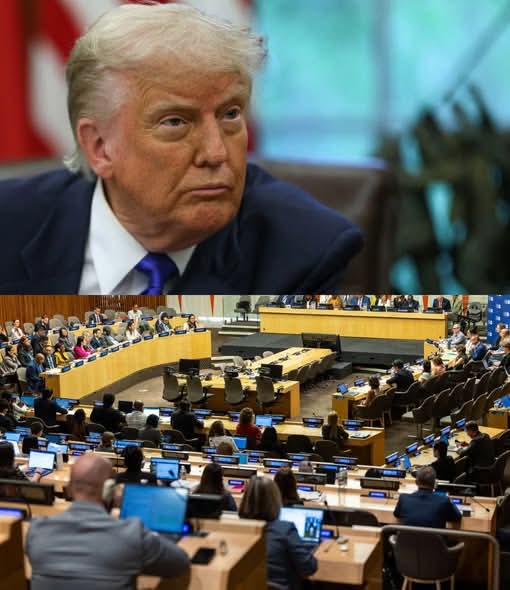
America’s Great Withdrawal: Inside the Alleged Dismantling of Global Cooperation and the Vacuum It Leaves Behind
If the reports are accurate, what unfolded on January 7 represents one of the most radical ruptures in modern U.S. foreign policy — not a recalibration, not a strategic pivot, but a wholesale rejection of the global cooperative order the United States itself helped design.
According to multiple accounts, President Donald Trump signed a memorandum directing every federal agency to begin withdrawing the United States from 66 international organizations, including 31 affiliated with the United Nations and 35 non-UN multilateral bodies. The scope of the directive is unprecedented in scale and ambition, reaching far beyond earlier withdrawals from individual institutions. This is not selective disengagement. It is systemic demolition.
The White House justification is blunt: these institutions are allegedly “contrary to the interests of the United States.” In one sweeping phrase, decades of diplomacy, scientific cooperation, humanitarian coordination, and collective security are reclassified as liabilities rather than assets.
What makes this moment extraordinary is not merely the number of institutions targeted, but which ones sit on the list.
At the heart of the reported withdrawals is the UN Framework Convention on Climate Change (UNFCCC) — the 1992 treaty that underpins every major global climate agreement, including the Paris Agreement. If carried out, this would leave the United States isolated from the core architecture governing global climate action, adaptation finance, emissions transparency, and scientific coordination.
Equally striking is the alleged severing of ties with the Intergovernmental Panel on Climate Change (IPCC), the world’s most authoritative body synthesizing climate science. For decades, the IPCC has functioned as the backbone of evidence-based climate policy, informing governments, insurers, militaries, and disaster planners worldwide. Walking away does not negate the science — it simply removes the United States from the room where the science is interpreted into policy.
The reported inclusion of UN Women, a central institution advancing gender equality, economic participation, and protections against gender-based violence, signals that this retreat is not confined to environmental policy. It extends into human rights, social development, and humanitarian norms that have defined post-World War II global engagement.
Secretary of State Marco Rubio, speaking on behalf of the administration, framed the ideological justification in stark terms. The United States, he argued, would no longer spend money, legitimacy, or diplomatic capital on institutions that conflict with U.S. “sovereignty, freedoms, and general prosperity.” Multilateral bodies were described as “wasteful,” unaccountable, and misaligned with national interests.
This rhetoric reflects a worldview that sees cooperation as constraint rather than leverage — a reversal of the logic that guided U.S. strategy for nearly eight decades. After World War II, Washington championed multilateralism not out of altruism alone, but because shared rules amplified American power, stabilized markets, prevented conflict, and ensured that rivals played on a field the U.S. helped design.
Critics argue that abandoning this framework is not an assertion of strength, but an act of strategic self-harm.
Former Biden climate adviser Gina McCarthy described the climate withdrawal as “shortsighted, embarrassing, and foolish,” warning that it strips the U.S. of influence at the very moment climate impacts are accelerating across American communities — from coastal flooding to agricultural disruption and insurance market collapse.
Policy analysts echo that concern. Withdrawal from the UNFCCC does not halt global climate action; it reallocates leadership. China, the European Union, and emerging powers in the Global South are already positioned to fill the vacuum, shaping rules on carbon markets, climate finance, and technology transfer — rules that will still affect U.S. companies, consumers, and security interests, even if Washington refuses to help write them.
The same dynamic applies across other domains reportedly affected by the directive. Pandemic preparedness does not stop at borders. Migration flows do not pause because a nation opts out of coordination. Human rights monitoring does not disappear when a powerful state disengages — it simply proceeds without that state’s voice or veto.
Supporters of the withdrawal argue that international institutions have grown bloated, politicized, and ineffective — and there is truth in that critique. Many multilateral bodies suffer from inefficiency, power imbalances, and outdated governance structures. Reform is overdue.
But reform requires engagement. Walking away forfeits leverage.
As past reporting has shown, the administration has previously applied similar logic to reject cooperation with institutions like the World Health Organization and UNESCO. Each time, the stated goal was sovereignty and fiscal responsibility. Each time, the result was diminished influence over standards, data sharing, and crisis response that continued regardless of U.S. participation.
What makes this moment different is the cumulative effect. This is not a series of withdrawals; it is an attempted dismantling of the connective tissue that binds global problem-solving together.
For advocates of international cooperation, the implications are profound. Climate change, forced displacement, pandemics, cyber threats, and transnational crime are not theoretical challenges — they are active, compounding risks. A world without coordination is not a freer world; it is a more chaotic one, where power accrues to those most willing to exploit fragmentation.
Authoritarian governments understand this well. They engage in international institutions not to strengthen democracy, but to bend rules, dilute norms, and reshape governance in their own image. When democratic powers disengage, that influence grows.
Ultimately, this alleged policy shift raises a question far larger than partisan politics or diplomatic preference. It challenges the assumption that the world’s most powerful democracy sees value in shared solutions to shared problems.
If the United States steps away by design, the vacuum will not remain empty. Others will fill it — with different values, different priorities, and different visions of global order.
The question is no longer whether America should lead. It is whether the rest of the world can afford an era in which America chooses not to.