NEWS
🚨 GRAMMYS SHOCKER! 🚨 Trevor Noah’s Epstein–Greenland joke about Trump just ignited a MASSIVE storm — and Trump fired back calling the Grammys “the WORST, virtually unwatchable,” threatening to sue for “false and defamatory” claims. He insists he has NEVER been to Epstein’s island. Comedy or total line crossed? The internet is exploding and sides are forming FAST. 👉 Click the link to watch the clip and see Trump’s furious response!

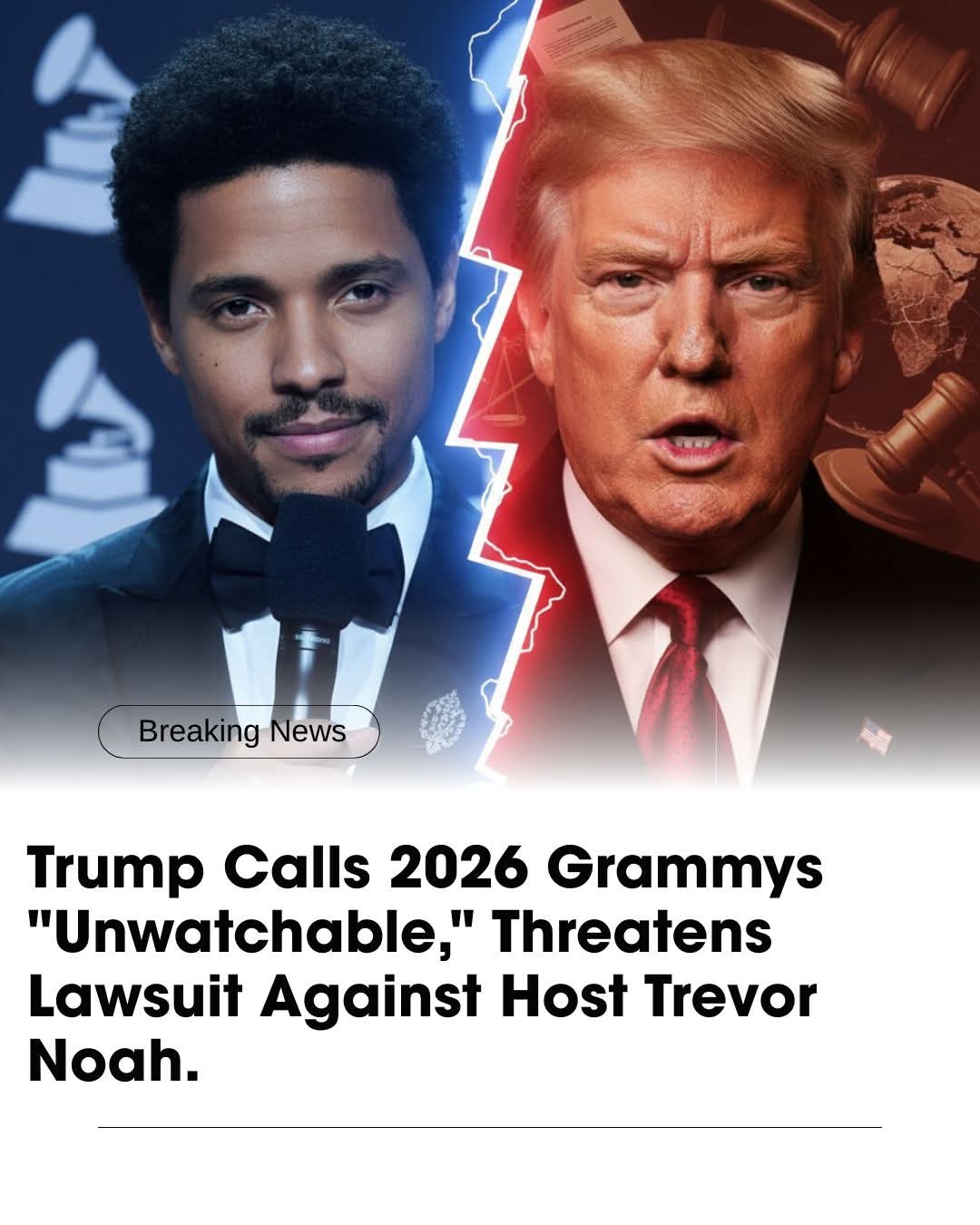
Inside the Explosion: Trump Threatens to Sue Trevor Noah After Grammy Monologue Sparks Firestorm
In what has quickly become one of the most talked-about controversies of the year, former U.S. President Donald Trump has unleashed a blistering response to comedian Trevor Noah after a joke during the 2026 Grammy Awards touched a long-simmering political nerve. What started as a punchline about Greenland and Jeffrey Epstein’s island has escalated into a dramatic public feud — with Trump calling the awards show “virtually unwatchable,” slamming Noah personally, and threatening to take legal action.
🎤 The Monologue That Set It Off
While hosting the 68th Annual Grammy Awards — his sixth and final time in the role — Trevor Noah delivered a monologue full of cultural commentary and biting humor. After congratulating Billie Eilish on winning Song of the Year, Noah leaned into satire with a line that immediately drew audience reaction:
“That is a Grammy that every artist wants… almost as much as Trump wants Greenland. Which makes sense, because Epstein’s island is gone, he needs a new one to hang out with Bill Clinton.”
That single joke — linking Trump and former President Bill Clinton with the disgraced financier Jeffrey Epstein’s private island — became the flashpoint that ignited a bombastic response from Trump later that night.
🔥 Trump’s Furious Response
Trump took to his social platform Truth Social after the broadcast to respond with unfiltered anger. In a lengthy post, he denied the implication of the joke and called it “false and defamatory,” insisting:
“I can’t speak for Bill, but I have never been to Epstein Island, nor anywhere close… until tonight’s false and defamatory statement, have never been accused of being there, not even by the Fake News Media.”
He didn’t stop there. Trump went on to label the Grammy Awards “the WORST, virtually unwatchable,” attacked the broadcast network and Noah himself, calling the host a “poor, pathetic, talentless, dope of an MC,” and warned:
“It looks like I’ll be sending my lawyers to sue this poor, pathetic, talentless, dope of an M.C., and suing him for plenty.” �
Trump also cited previous settlements he won against major networks — including ABC and CBS — as a signal that he’s prepared to pursue litigation again. �
TheWrap
🧨 An Entertainment Show Turns Political Flashpoint
What was intended as comedic commentary quickly morphed into something far larger. The Grammys this year were already politically charged: several artists used their acceptance speeches to criticize U.S. immigration policies and advocate for social causes, with visible statements like “ICE OUT” worn by attendees.
But Noah’s joke — centered on a former president and one of the most sensitive and infamous scandals in recent decades — shifted the narrative beyond entertainment into political controversy. Even publications covering the show noted that Noah’s monologue was lighter at first but became sharper as it progressed, touching on figures and topics well outside music. �
🧠 What This Means and Why It Matters
Legal experts have pointed out that public figures like Trump face a high bar to win defamation cases, especially when the statements are made in a comedic context. But regardless of legal merits, Trump’s reaction underscores how cultural moments — even jokes — can spiral into headline-making disputes in the digital age.
This feud also highlights broader tensions between celebrities and political figures, where commentary on public stages now often intersects with partisan debates and legal threats. Noah himself referenced the litigious nature of such moments, joking earlier in the show that the Grammys were being broadcast live to avoid edits “because if we edited any of the show, the president would sue CBS.” �
🗯️ Reactions and Backlash
Across social media and news outlets, reactions have ranged from amusement to outrage. Some commentators say the joke was fair game in a comedic setting, while others argue Trump’s threat deepens concerns about free speech and satire. Meanwhile, online debates have been fueled by everything from GIF memes of the Truth Social post to speculation about whether a lawsuit will actually materialize.
The clash has also become another flashpoint in the ongoing cultural conversation about how public figures are portrayed in entertainment, and where the line lies between humor and defamation.