
NEWS
BREAKING: Thomas Massie announced he’ll fight Trump’s Glysophate executive order by introducing the “No Immunity for Glyphosate Act.” Under this act, manufacturers will be stripped of the immunity from liability that Trump just gave them. Do you agree with Thomas Massie?

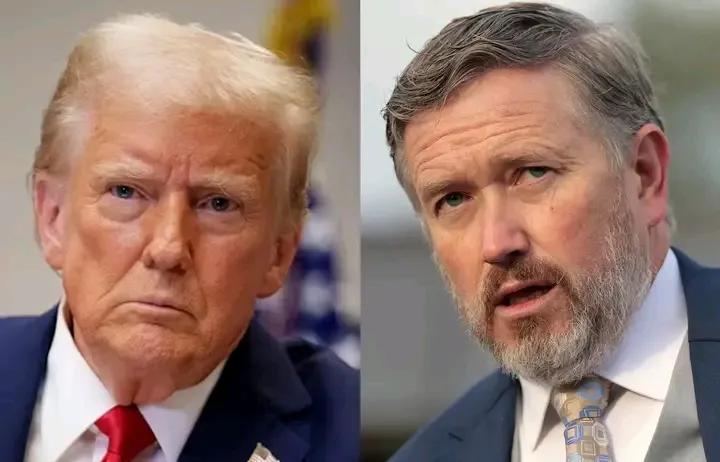
POLITICAL FIRESTORM ERUPTS OVER TRUMP’S GLYPHOSATE EXECUTIVE ORDER — MASSIE MOVES TO STRIKE LIABILITY SHIELD
Washington, D.C. — A major controversy has unfolded in U.S. politics this week after President Donald Trump signed an executive order aimed at boosting domestic production of glyphosate-based herbicides, a widely used agricultural chemical and the active ingredient in Roundup weed killer.
The move, framed by the White House as a matter of national security and agricultural resilience, has drawn sharp criticism from a broad swath of activists, lawmakers, and voters — including a Republican member of Congress who says he will move to counter the order legislatively. �
Trump’s Order and the Immunity Provision
On February 18, 2026, President Trump invoked the Defense Production Act, directing federal agencies to ensure an “adequate supply” of elemental phosphorus and glyphosate-based herbicides crucial for crop yields and, in the administration’s view, national defense and food security. Under the law, such directives can include immunity protections for manufacturers who comply with federal production priorities.
The order’s immunity language has alarmed critics because it could shield companies from liability for harms allegedly caused by glyphosate, which has been the subject of hundreds of thousands of lawsuits linking it to cancers and other health issues. Bayer — the company that acquired Monsanto, maker of Roundup — has been central to this litigation and recently proposed a multi-billion-dollar settlement while continuing to fight liability claims in court. �
Bipartisan Backlash and Public Outrage
The executive order triggered immediate backlash from public health advocates, environmental groups, and parents, particularly within the movement known as MAHA (“Make America Healthy Again”) — originally aligned with Health Secretary Robert F. Kennedy Jr. Some MAHA supporters say the order betrays promises to address toxins in food and the environment, and could alienate these voters in the 2026 midterm elections. �
Critics argue that glyphosate has been linked to cancers and that granting immunity to manufacturers undermines the right of victims and families to seek justice in court. This concern is widely reflected in public petitions and activist statements calling for accountability and the protection of civil litigation rights. �
Republican Division: Thomas Massie Steps In
The response from Capitol Hill has been unusual in its partisan cross-currents. Republican Representative Thomas Massie (R-Ky.) — known for his libertarian-leaning views and emphasis on limited government — publicly rejected the executive order’s liability shield and announced he will introduce the “No Immunity for Glyphosate Act.” According to Massie’s social media post, the bill is designed to remove the liability immunity that his critics say Trump’s order would grant to pesticide manufacturers. �
In a sharply worded message, Massie said the new act would “undo the recent Executive Order which promotes glyphosate (Round-Up) and insulates manufacturers from liability,” making clear he believes such liability protections are inappropriate and potentially harmful to public accountability. �
This stance places Massie at odds with many in his own party who typically support deregulation and industry protections, highlighting deepening tensions over regulatory authority, corporate liability, and the executive branch’s power under the Defense Production Act.
Democrats and Environmental Advocates Weigh In
Senator Cory Booker (D-N.J.) also condemned the executive order, calling it a dangerous move that appears to protect large chemical companies instead of prioritizing public health. Booker highlighted the need for legislation that guarantees people harmed by toxic pesticides have the right to their day in court — a broad critique that aligns with Massie’s legislative intent, albeit from a very different political perspective. �
Environmental advocacy groups like the Center for Food Safety echoed these concerns, arguing that the executive order is legally questionable and could complicate future litigation without actually ensuring any meaningful public health benefit. �
What Comes Next
The unfolding dispute over glyphosate’s legal status and liability protections is now shaping up as a defining issue for multiple constituencies: farmers who rely on herbicides, families affected by alleged pesticide health impacts, legal advocates for consumer rights, and lawmakers debating executive authority and congressional oversight.
Massie’s No Immunity for Glyphosate Act is expected to be formally introduced in the coming days. Whether it gains traction among his Republican colleagues, gains support from Democrats, or influences the Republican leadership’s stance on executive power remains to be seen.
With the 2026 midterm elections approaching, this debate may influence broader political dynamics — especially in rural districts and among voters concerned about health, agriculture, and government accountability. �
Yahoo

BREAKING: Study reveals Trump’s Iran war has cost American households $750 each Trump launched a war in Iran in February without a single vote from Congress, and American families are now footing the bill. A new analysis from Moody’s Analytics puts the total cost to U.S. households at $100 billion so far, working out to roughly $750 per household.
BREAKING: TOTAL DEFEAT! Trump abandons his $1.8 billion slush fund for insurrectionists and MAGA pedophiles after America revolted against the deeply corrupt plan.
BREAKING: A federal appeals court dealt a major blow to the Trump administration’s transgender military policy, ruling that thousands of transgender service members are likely to succeed in their constitutional challenge.
Kennedy Center Fight Sparks Fresh Trump Reactions Political attention remains fixed on Donald J. Trump after a federal judge ordered the removal of Trump’s name from the Kennedy Center and blocked plans to close the institution for major renovations.
🚨👀 THE EPSTEIN FILE SHOWDOWN IS LITERALLY BLOWING UP WASHINGTON! Congressman Thomas Massie has completely rocked the political world by demanding the immediate release of the unredacted Jeffrey Epstein files! Massie went absolutely wild on the DOJ, accusing them of actively shielding insanely powerful names from the public view. Transparency advocates are screaming that the full truth must drop to restore public trust, while critics claim it’s a dangerous media circus. Is a massive cover-up happening right now, or is this just political theater? Do you support a full congressional review to uncover the truth, or it will raise a political warfare?

TUSK CZY NAWROCKI? Nowy sondaż szokuje. Polacy wyraźnie wybrali, komu ufają bardziej
At 8:15 this morning, the President of the United States began panicking in front of the entire world. For more than seven hours, he posted nearly 50 times. And when he finally slowed down, it would stand as one of the most revealing fits of rage of his presidency to date. Because what he shared was beyond any reasonable person’s comprehension.
🚨 JUST IN: 🇺🇸 US forces fire a missile at a ship attempting to bypass the American blockade in the Gulf of Oman
Donald J Trump’s name being torn down from the John F. Kennedy Center for the Performing Arts in Washington, D.C. wasn’t just a slap in the face to the GOP and their bad policies it was a reminder that hate has no place in America. U.S.A.
🚨 JUST IN: 🇵🇱🇷🇺 Polish Foreign Minister Radosław Sikorski says: “Regardless of whether it was on purpose or the result of ineptitude, Russia is still dangerous and we must defend ourselves against it.”
🚨 JUST IN: 🇮🇷🇺🇸 An Iranian missile strike on a U.S. military base in Kuwait reportedly injured five Americans and damaged MQ-9 Reaper
